Chesapeake grew fast over the last three decades. Farmland turned into subdivisions. That transformation hides a problem – the ground is not uniform. The city sits on the Atlantic Coastal Plain, where ancient river terraces left behind interbedded sands, silts, and stiff clays. A soil mechanics study in Chesapeake is the only way to map those layers before you break ground. We have drilled on sites near the Intracoastal Waterway where loose sand sat right on top of hard clay, a classic bearing failure trap. Combining that with a permeability field test helps us understand how water moves through those strata, which controls everything from excavation stability to foundation drainage.
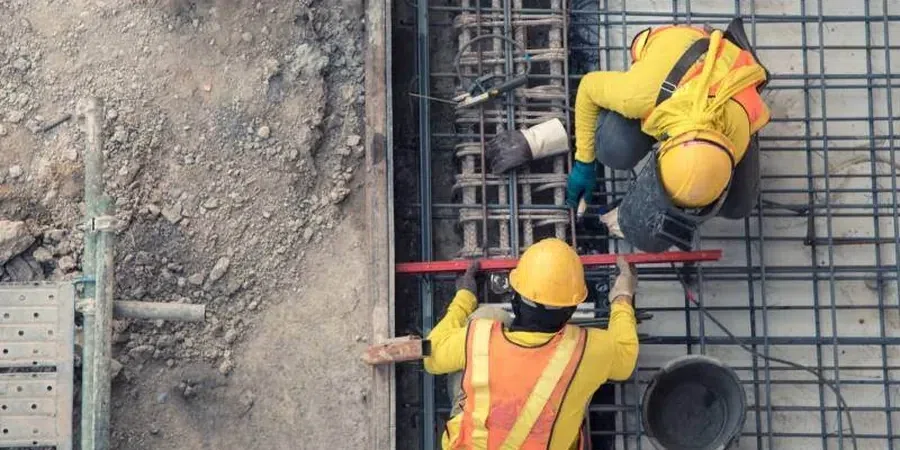
A soil mechanics study in Chesapeake is not optional – it is the difference between a foundation that settles 2 inches and one that cracks.
Approach and scope
- Standard Penetration Test (SPT) per ASTM D1586 every 5 feet
- Undisturbed tube sampling in clay layers
- Groundwater monitoring well installation
- Laboratory triaxial and consolidation testing
Site-specific factors
A common mistake we see in Chesapeake is skipping the soil mechanics study because the site looks flat and dry. Builders assume sand = good bearing. But the sand here is often loose, and below it sits a clay layer that can compress under load. We worked on a commercial slab in the Greenbrier area where the contractor relied on a 10-year-old boring log from a neighboring lot. Within six months the slab settled 4 inches. The old log missed a 6-foot layer of soft organic clay. A proper soil mechanics study in Chesapeake would have caught that and the engineer could have specified ground improvement or deep foundations.
Relevant standards
ASTM D1586-18 (SPT), ASTM D2487-17 (Unified Soil Classification), ASTM D4318-17 (Atterberg Limits), IBC 2021 Chapter 18 (Foundations), ASCE 7-22 (Seismic site class)
Related technical services
Field Investigation & Sampling
Borehole drilling with SPT, undisturbed sampling, and groundwater monitoring. We mobilize a truck-mounted rig and complete 3 to 5 borings per day.
Laboratory Testing & Analysis
Triaxial compression, consolidation, direct shear, and classification. All tests follow ASTM standards. Results include bearing capacity, settlement estimates, and seismic site class.
Typical parameters
FAQ
How deep do you drill for a soil mechanics study in Chesapeake?
Depth depends on the structure. For a single-family home we usually go 20 to 30 feet. For a commercial building we drill to 40 or 50 feet. The goal is to reach a competent bearing layer or to penetrate at least 10 feet below the anticipated foundation depth.
What is the typical cost range for a soil mechanics study in Chesapeake?
A standard residential study runs between US$2,760 and US$4,870. Commercial projects with deeper borings and more lab tests fall at the higher end. The final quote depends on number of borings, depth, and laboratory requirements.
How long does it take to get the report?
Fieldwork takes one to two days. Lab testing adds another five to seven business days. You can expect the full report with recommendations within 10 to 14 days after mobilization.
Do you handle seismic site classification for Chesapeake?
Yes. We measure shear wave velocity using the SPT N-values and correlate to NEHRP site classes. Most of Chesapeake falls into Site Class D (stiff soil) or C (dense sand). The report includes the site class per ASCE 7-22.