In Chesapeake, we often encounter loose sands and soft clays left by ancient river channels. These deposits make grouting design essential before any foundation work. Without it, settlements become unpredictable. Our team evaluates the soil profile and selects the right injection method. We have used permeation grouting to stiffen sandy layers beneath commercial slabs. For tighter budgets, compaction grouting displaces and densifies loose zones. Each design starts with a site investigation, which may include a georradar GPR survey to map subsurface anomalies before drilling injection holes. This saves time and reduces surprises.
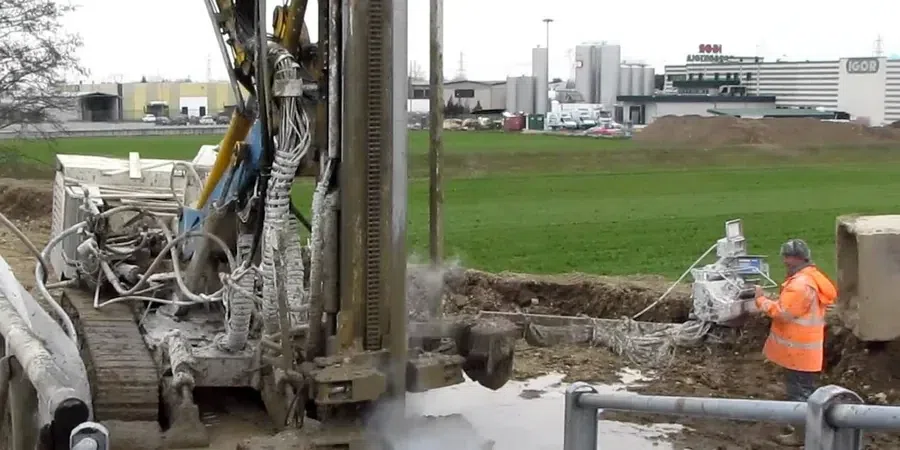
Grouting design in Chesapeake must account for shallow groundwater and variable Coastal Plain soils. One-size-fits-all approaches fail here.
Approach and scope
- Site reconnaissance and soil classification per ASTM D2487.
- Permeability testing to set injection parameters.
- Selection of grout type: cement, chemical, or compaction.
- Pressure and volume calculations based on fracture gradient.
Site-specific factors
Chesapeake sits on the Atlantic Coastal Plain, where sand lenses and clay pockets alternate unpredictably. This heterogeneity creates a major risk: grout may follow preferential paths and leave untreated zones. If the design ignores the actual permeability profile, you get partial improvement. Another risk is hydrofracturing. In soft clays, excessive pressure can split the ground instead of filling voids. Our grouting design accounts for these issues by running step-rate tests before full injection. We also cross-check with monitoring wells to avoid contaminating the shallow aquifer, which supplies drinking water to many homes here.
Relevant standards
ASTM D5092 – Standard Practice for Design and Installation of Groundwater Monitoring Wells, ASCE Grouting Committee Guidelines for Chemical and Compaction Grouting, IBC Chapter 18 – Soils and Foundations (grouting for underpinning)
Related technical services
Permeation Grouting Design
For sandy soils with moderate permeability. We specify low-viscosity cement or chemical grouts to fill pore spaces without disturbing the soil structure. Ideal for underpinning existing structures.
Compaction Grouting Design
A stiff, low-slump grout is injected to displace and densify loose sands or fills. Used beneath new slabs and footings where settlement control is critical. We calibrate injection volumes in real time.
Jet Grouting Design
High-pressure jets erode and mix soil with grout to create columns of treated ground. Suitable for deep soft clays or for creating cutoff walls. We design column diameter and spacing based on soil strength.
Typical parameters
FAQ
How much does grouting design cost in Chesapeake?
A typical grouting design package, including site investigation and injection parameters, ranges between US$1.200 and US$3.790 depending on the number of injection points and required laboratory testing.
What is the difference between permeation and compaction grouting?
Permeation grouting fills soil pores without displacing the matrix, ideal for sands. Compaction grouting uses a stiff mortar that displaces and densifies loose soils. The choice depends on soil type and improvement goal.
Can grouting design fix settlement issues in existing buildings?
Yes, but only if the cause is loose or compressible soil. We first diagnose the settlement mechanism with borings and monitoring. Then we design a compaction or permeation grouting program to lift and stabilize the foundation.