Sitting just 12 feet above sea level, Chesapeake faces unique geotechnical challenges. High water tables and soft marine clays dominate much of the subsurface. That is why the Cone Penetration Test, or CPT, has become our go-to tool here. It delivers a continuous log of soil behavior, tip resistance, and sleeve friction. Instead of relying on discrete samples, we get a near-real-time profile. In Chesapeake, this is crucial for identifying loose sands that can liquefy or compressible clays that settle unevenly. The test follows ASTM D5778-20, and the data feeds directly into bearing capacity and settlement calculations. Before finalizing foundation plans, we often pair the CPT with a georadar survey to map shallow utilities and buried obstructions, or with soil classification to confirm soil types across the site.
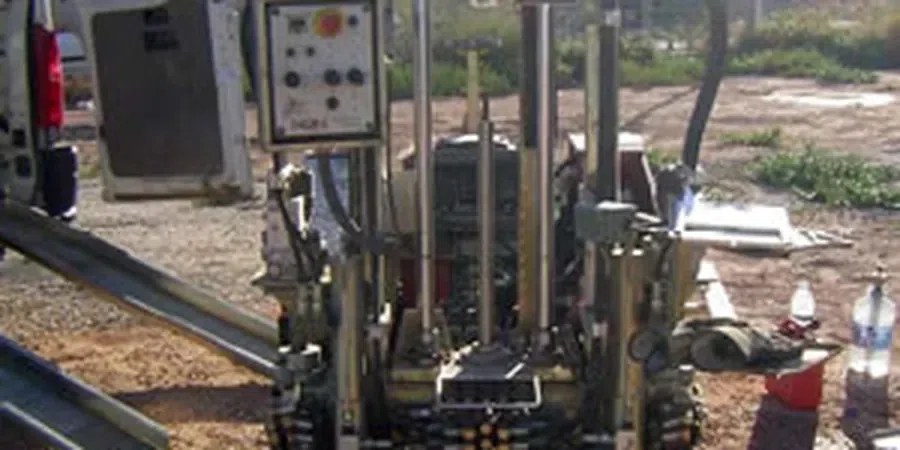
A single CPT sounding can capture more stratigraphic detail than five SPT borings in Chesapeake’s variable soils.
Approach and scope
- Soil behavior type (SBTn) via Robertson charts
- Undrained shear strength in clays
- Relative density in sands
- Friction angle and modulus
Site-specific factors
We worked on a townhouse project near the Dismal Swamp Canal. The geotechnical report from a previous firm used SPT only, showing uniform clay. But during excavation, a 3-foot layer of loose sand appeared beneath the clay. The footing design did not account for it. The result was a 4-inch settlement in one corner within six months. That is the kind of hidden layer a CPT would have caught. In Chesapeake, where the water table sits less than 5 feet deep, missing a sand seam can trigger liquefaction during a seismic event. The IBC and ASCE 7 require site-specific assessments, and CPT data is the most reliable way to satisfy those requirements for soft ground conditions.
Service video
Relevant standards
ASTM D5778-20, IBC 2021 Chapter 18, ASCE 7-22 (Seismic Site Class)
Related technical services
Standard CPT Soundings
Continuous profiling to depths up to 30 m. Includes tip resistance, sleeve friction, and pore pressure measurements. Data is processed in real time and interpreted using Robertson’s soil behavior classification.
CPT with Seismic Module
Adds shear wave velocity (Vs) measurements at 1 m intervals. Ideal for seismic site class determination (ASCE 7) and liquefaction triggering analysis. Especially valuable in Chesapeake’s sandy terraces.
Typical parameters
FAQ
What is the main difference between CPT and SPT?
CPT provides a continuous profile of soil resistance, while SPT gives discrete values at 1.5 m intervals. CPT also measures pore pressure and friction ratio, making it more sensitive to thin layers. For Chesapeake's variable subsurface, CPT reduces the risk of missing critical strata.
How much does a CPT test cost in Chesapeake?
For a standard CPT sounding to 20 m depth, the typical cost ranges from US$150 to US$210 per sounding. This includes mobilization, data collection, and a preliminary log. Final interpretation and reporting are billed separately depending on project scope.
Can CPT detect liquefaction potential?
Yes. CPT data directly feeds into liquefaction triggering models like Robertson & Wride (1998) or Idriss & Boulanger (2008). The continuous pore pressure readings also show whether the soil is contractive or dilative, which is key for sandy layers in Chesapeake.
What soil types can the CPT penetrate in this region?
The reference range for this service in Chesapeake is US$150 - US$210. The final price depends on the project scope and volume.