Around Chesapeake, we often see subgrade soils that look promising on the surface but turn out to be low-strength clay or silty sand once you dig in. That is exactly why we approach road subgrade design by first running a full set of laboratory classifications and compaction tests. Before any pavement layer gets placed, we determine the natural moisture content, Atterberg limits, and the Proctor density curve so that the design CBR reflects what is actually in the ground. For projects that cross the Elizabeth River corridor, combining this data with a drainage geotechnical study helps us account for seasonal water table fluctuations that can soften the subgrade.
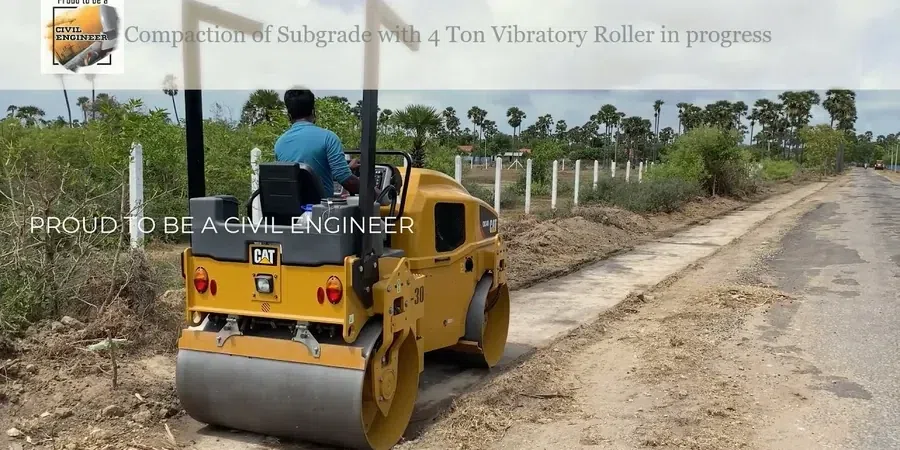
CBR values below 3 in Chesapeake's native clays require subgrade stabilization before any pavement base is placed — skipping this step guarantees premature cracking.
Approach and scope
- Maximum dry density and optimum moisture content (ASTM D698)
- Soaked and unsoaked CBR at 95% compaction (ASTM D1883)
- Swelling pressure and linear shrinkage
- Resilient modulus correlation based on CBR and soil type
Site-specific factors
If you compare subgrades near the Great Dismal Swamp with those in the Greenbrier area, the difference is night and day. The swamp side has organic silts with CBR values under 2, while Greenbrier's older terrace sands can hit CBRs above 10. That variability is the biggest risk in road subgrade design here — you can overdesign in one section and underdesign in another if you rely on a single boring. We always recommend at least one CBR test per 500 feet of alignment and a minimum of three per project to capture that lateral change. Ignoring the local clay's shrink-swell behavior has led to longitudinal cracking on several Chesapeake collector roads within five years of construction.
Relevant standards
ASTM D698 – Standard Proctor Compaction, ASTM D1883 – CBR (California Bearing Ratio), ASTM D4318 – Atterberg Limits, VDOT Road and Bridge Specifications (Section 301)
Related technical services
CBR Testing for Subgrade Design
Soaked and unsoaked CBR per ASTM D1883 on undisturbed or recompacted samples. We report swell, penetration resistance, and density for each test point.
Compaction Characteristics (Proctor)
Standard and modified Proctor curves (ASTM D698 / D1557) to establish the moisture-density relationship for subgrade compaction control during construction.
Soil Classification & Index Properties
Full Atterberg limits, grain-size analysis, and AASHTO / USCS classification to identify expansive or collapsible soils before pavement design begins.
Typical parameters
FAQ
What CBR value is typically required for road subgrade in Chesapeake?
VDOT generally expects a minimum CBR of 3 for the subgrade layer, though many projects target 5 or higher to reduce base thickness. In Chesapeake, native soils often test between 2 and 8, so stabilization with cement or lime is common when values fall below 3.
How many subgrade samples do I need for a typical Chesapeake road project?
For a standard subdivision street or collector road, we recommend one CBR test per 500 linear feet, with a minimum of three tests per project. If the alignment crosses different geologic units (e.g., swamp deposits vs. terrace sands), additional samples are needed to capture the variation.
What is the difference between soaked and unsoaked CBR?
Soaked CBR simulates worst-case moisture conditions after rainfall or high water table, which is critical for Chesapeake's coastal plain. Unsoaked CBR represents as-compacted conditions. We always run both, and the soaked value typically governs the design thickness.
How do you handle expansive clay subgrades in Chesapeake?
For high-plasticity clays (CH or MH), we measure swell pressure and linear shrinkage. If the swell exceeds 2%, we recommend chemical stabilization (lime or cement) or mechanical mixing with granular material before placing the base course. We have documented cases where untreated clays caused pavement heave within two years.
What is the typical cost range for road subgrade design testing in Chesapeake?
The cost for a complete subgrade characterization — including Proctor, CBR, Atterberg limits, and classification — typically falls between US$1,180 and US$3,320 per project, depending on the number of samples and whether soaked CBR is required. Volume discounts apply for multiple tests on the same alignment.