Chesapeake sits on the Coastal Plain province, where the ground is dominated by the Yorktown and Chowan River formations — layers of silty clay, sand, and shell hash that can shift dramatically within a few hundred feet. We frequently encounter soft to medium-stiff clays with undrained shear strengths below 20 kPa, often interbedded with loose sands. For sites near the Dismal Swamp or along the Elizabeth River, groundwater sits less than 3 feet deep. That combination of low-strength soils and high water table makes conventional shallow foundations impractical. Deep soil mixing (DSM) design is our go-to solution for creating stiff, low-permeability columns in place. Before specifying binder content and column spacing, we first conduct a thorough geotechnical site investigation with SPT borings to map stratigraphy and obtain undisturbed samples for lab testing. The design then tailors cement or slag ratios to the actual in-situ moisture content and organic content.
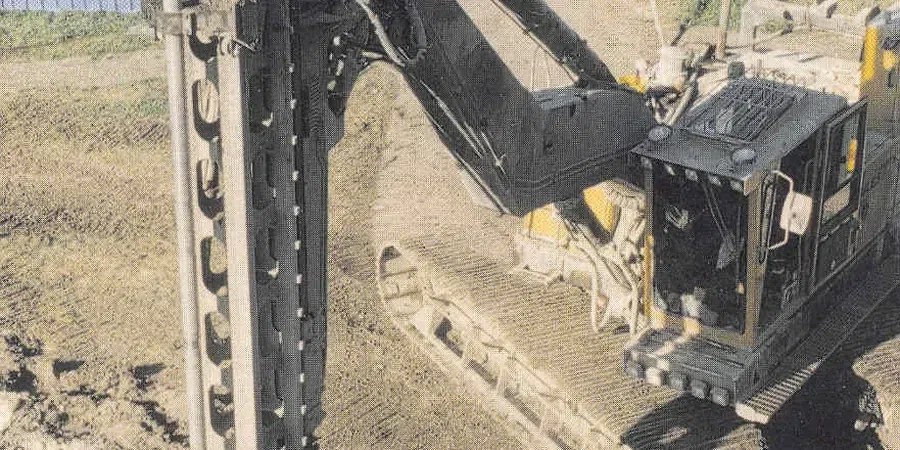
For Chesapeake's soft clays and high water table, deep soil mixing columns create a stiff composite ground that reduces total settlements by 50-70% compared to untreated soil.
Approach and scope
Site-specific factors
Chesapeake grew rapidly along the Intracostal Waterway and Route 168 corridor, with many subdivisions and commercial centers built over former wetlands and agricultural fields. The legacy of that expansion is a patchwork of soft ground that can settle unevenly under new loads. Without proper ground improvement, structures on these soils can experience differential settlements on the order of 50 to 150 mm, enough to crack pavements and tilt foundations. Deep soil mixing directly addresses that risk by transforming the weak in-situ soil into a stiff, load-bearing matrix. We design DSM to limit post-construction settlements to less than 25 mm under typical building loads, and we verify performance through field load tests and post-construction monitoring. Skipping this step often leads to costly repairs down the line.
Relevant standards
ASTM D1586-18 (SPT), ASTM D2487-17 (Unified Soil Classification), FHWA-HIF-13-052 (Deep Mixing Manual), ACI 230.1R-09 (Soil-Cement), IBC 2021 Chapter 18 (Soils and Foundations)
Related technical services
DSM Column Design for Embankments & Foundations
We calculate column layout, diameter, and binder mix to control total and differential settlements under static and live loads. Our designs include wet grab sampling and coring verification.
Binder Optimization & Mix Design
Using lab index tests and trial mixes on site soils, we determine the most cost-effective binder type (cement, slag, or blended) and dosage to meet strength and durability targets.
Field Verification & Load Testing
After installation, we perform unconfined compression tests on wet grab samples and core specimens, plus static load tests on selected columns to confirm design assumptions.
Typical parameters
FAQ
How deep can deep soil mixing columns go in Chesapeake?
Typical depths range from 5 to 25 meters, depending on the rig and soil conditions. In Chesapeake, we often reach 15 to 20 m to penetrate through the soft Yorktown clays and seat the columns in denser sand layers. Deeper columns are possible with specialized equipment.
What is the typical cost range for DSM design in Chesapeake?
Design fees vary by project scope and volume, but a typical range for a medium-size commercial site in Chesapeake runs between US$1,710 and US$6,480. This includes site investigation, mix design, column layout, and verification testing. Larger projects or those requiring extensive lab work may fall on the higher end.
How do you account for high groundwater during DSM installation?
High water table is common in Chesapeake, especially near the Dismal Swamp and along the Elizabeth River. We design the slurry mix with a water-cement ratio between 0.6 and 1.2 to ensure proper hydration and prevent washout. We also monitor excess pore pressures during installation to avoid disturbance to adjacent soils.