Chesapeake sits on the Atlantic coastal plain with elevations barely reaching 12 meters above sea level. The water table here is high, often within 1.5 meters of the surface, which means subgrade soils stay saturated for long periods. That creates a real challenge for pavement design. We handle this by combining CBR testing with resilient modulus analysis to capture how the subgrade will actually behave under traffic loads. A thorough pavement investigation in Chesapeake starts with a clear picture of the existing soil profile. We recommend pairing the road geotechnics assessment with a granulometry test to classify the base and subbase materials accurately before running any compaction curves.
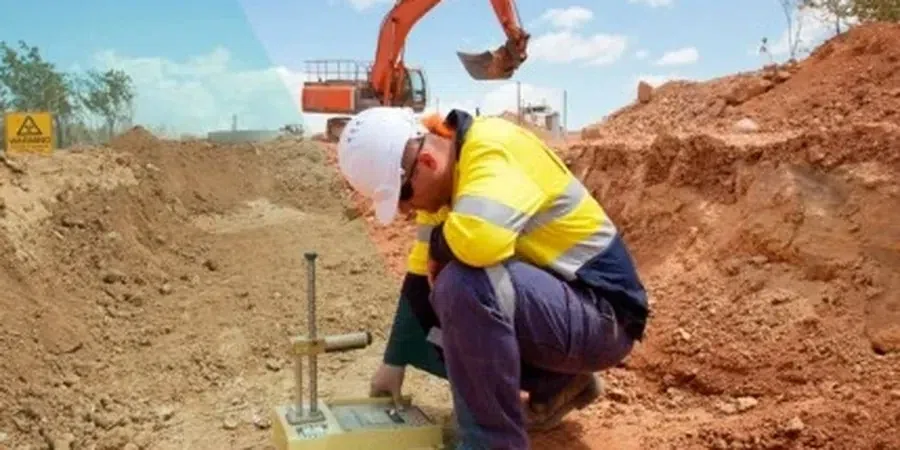
In Chesapeake, seasonal moisture swings can drop subgrade resilient modulus by 40%, directly affecting pavement life and maintenance intervals.
Approach and scope
Site-specific factors
Subgrade variability is the biggest risk we see in Chesapeake. One borehole might show well-graded sand, and 50 meters down the line you hit soft clay with a CBR of 2. That kind of inconsistency leads to differential settlement and premature pavement cracking if you don't sample enough. We recommend one test pit every 150 meters along the alignment, plus a CBR at every change in soil type. Ignoring the seasonal water table rise is another common mistake. The subgrade strength you measured in dry October is not the same as the one you'll have in wet March. Our road geotechnics approach accounts for that fluctuation by testing at optimum moisture and at soaked conditions.
Relevant standards
ASTM D1883 (CBR for compacted soils), ASTM D1557 (Modified Proctor), AASHTO T-307 (Resilient Modulus), FHWA NHI-05-037 (Subgrade Design Guide)
Related technical services
Subgrade Investigation and CBR Testing
Full-depth test pits, Shelby tube sampling, and laboratory CBR on undisturbed and remolded samples. We determine the design CBR for each pavement layer, including the subbase and base course, following ASTM D1883 procedures.
Resilient Modulus and Pavement Design Support
Cyclic triaxial testing per AASHTO T-307 to establish Mr values for flexible pavement design. We also provide k-value estimates for rigid pavements and recommend layer thicknesses using AASHTO 1993 or MEPDG methodology.
Typical parameters
FAQ
How much does a road geotechnics study cost in Chesapeake?
For a standard residential street or small subdivision, cost ranges between US$ 920 and US$ 3,660 depending on the number of test pits, CBR specimens, and resilient modulus tests required. Larger arterial roads with multiple soil strata may fall at the higher end.
What is the difference between CBR and resilient modulus?
CBR is a static penetration test that measures bearing capacity under a constant load rate. Resilient modulus (Mr) simulates repeated traffic loading and measures the soil's elastic recovery. Mr is more realistic for flexible pavement design, but CBR is still widely used for empirical layer thickness charts.
How many test pits do I need for a pavement design in Chesapeake?
We recommend one test pit per 150 linear meters of roadway, plus an extra pit at every change in soil type or drainage condition. For a 1 km road, that means 7 to 8 pits. Each pit should include a CBR test and a soil classification sample.
Do you test subgrade under saturated conditions?
Yes. We soak CBR specimens for 96 hours before testing to simulate the worst-case spring thaw or rainy season condition. We also run resilient modulus tests at three moisture levels: dry of optimum, optimum, and wet of optimum, to capture the full range of subgrade behavior.