A common mistake we see in Chesapeake is assuming the coastal plain geology is simple. Builders often skip a proper slope stability analysis, relying on experience from other projects. That leads to failures during heavy rain or construction surcharge. The shallow water table and interbedded sands, silts, and clays demand site-specific evaluation. We combine field data with limit equilibrium modeling to deliver reliable factors of safety. Before finalizing any cut or fill, we recommend pairing this with a geotechnical drainage study to control pore pressures and a site-specific seismic response analysis for earthquake loads.
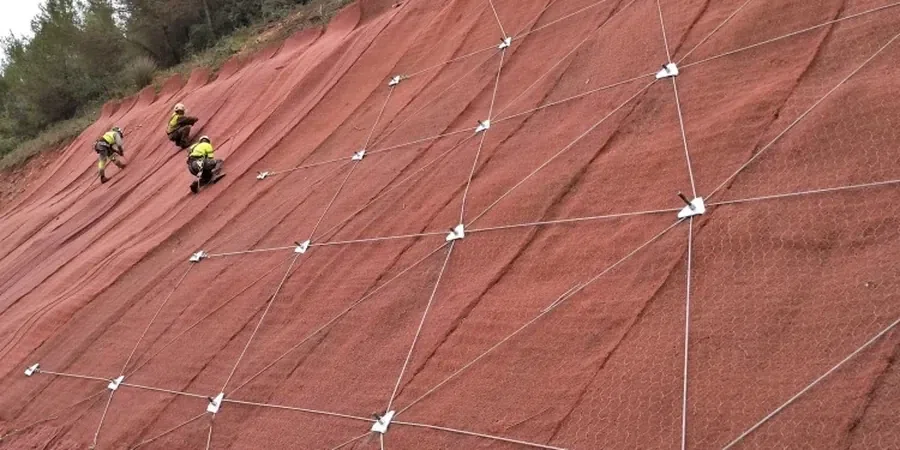
In Chesapeake, the shallow water table and interbedded formations make slip surfaces hard to predict. One missing piezometer can change your factor of safety by 0.3.
Approach and scope
- Bishop simplified and Spencer methods for rotational slips
- Undrained and drained strength envelopes from triaxial and direct shear tests
- Inclinometer monitoring for existing slopes, integrated with our landslide monitoring system for real-time data
Site-specific factors
The geology around Chesapeake is deceptive. Below a thin topsoil, you hit the Yorktown Formation — a mix of shell-rich sand, clayey silt, and occasional gravel lenses. Groundwater sits between 2 and 6 feet below grade across much of the city. During hurricane season, that level can rise 3 feet in 48 hours. If your slope stability analysis doesn't account for transient seepage and rapid drawdown, you risk catastrophic failure. We've seen cuts on Battlefield Boulevard fail because no one modeled the perched water table. That's why we install vibrating-wire piezometers and run transient flow models before giving you a final report.
Relevant standards
ASCE 7-16 Minimum Design Loads (seismic coefficients), IBC 2021 Chapter 18 (excavation and grading), FHWA-NHI-05-083 (geotechnical slope stability)
Related technical services
Limit Equilibrium & Finite Element Modeling
Full 2D/3D analysis using Slide 6.0 and Plaxis 2D. We model multiple slip surfaces, reinforcement layers, and staged construction sequences.
Instrumentation & Monitoring
Inclinometers, piezometers, and tiltmeters installed and read weekly or remotely. Data delivered via web dashboard with automated alerts.
Remediation Design
Design of soil nails, tieback anchors, geogrid-reinforced fills, and drainage blankets. We prepare construction-ready drawings and specifications.
Typical parameters
FAQ
What is the difference between simplified Bishop and Spencer's method?
Simplified Bishop ignores interslice shear forces and assumes a circular slip surface. Spencer's method satisfies both force and moment equilibrium and can handle non-circular surfaces with inclined interslice forces. For Chesapeake's layered clays and sands, Spencer gives more realistic factors of safety.
How deep do you typically install inclinometers for slope monitoring in Chesapeake?
We install inclinometer casings to at least 5 feet below the deepest potential failure surface. In Chesapeake, that often means 25 to 40 feet depth, passing through the Tabb Formation into the denser Yorktown sands. The casing is grouted full length and surveyed for vertical alignment.
What factor of safety does IBC require for a permanent slope in Chesapeake?
IBC 2021 does not prescribe a single number, but our practice follows FHWA guidelines: 1.5 for static conditions, 1.1 for seismic, and 1.3 for rapid drawdown. For critical structures like schools or hospitals, we often target 1.6 static. Local geotechnical reports in Chesapeake typically adopt these values.
Can you run a slope stability analysis using SPT blow counts alone?
No. SPT N-values give relative density but not strength parameters. We need triaxial or direct shear tests on undisturbed samples to get effective cohesion and friction angle. For preliminary screening, we use published correlations (e.g., Hatanaka & Uchida, 1996), but final design requires lab testing.