Under ASTM D2435 and D4186 standards, the oedometer consolidation test measures the rate and magnitude of soil settlement under controlled vertical loads. For Chesapeake, where much of the city sits on thick deposits of marine clay and organic silt from the Dismal Swamp region, this test is especially relevant. These compressible layers can cause long-term differential settlement if not properly characterized. We recommend pairing the oedometer test with a thorough site investigation to map stratigraphy before sampling, and cross-referencing results with field permeability tests to refine drainage assumptions.
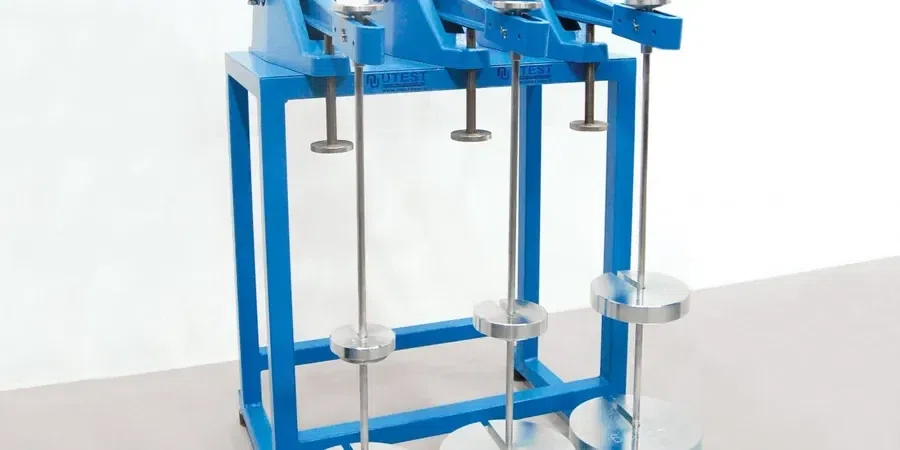
Marine clays in Chesapeake routinely show compression indices between 0.25 and 0.45, requiring careful settlement analysis for any structural fill or shallow foundation.
Approach and scope
Site-specific factors
Chesapeake straddles the boundary between the Coastal Plain and the Suffolk Scarp, where Pleistocene marine terraces overlie compressible Norfolk Formation clay. The water table often sits within 2 meters of the surface. Without oedometer test data, designers risk underestimating primary consolidation settlement by 30-50% in these saturated clays. The 2011 Mineral, Virginia earthquake (M5.8) also demonstrated that liquefaction-induced settlement can amplify total deformations. Post-construction monitoring in Chesapeake subdivisions has confirmed that ignoring consolidation parameters leads to cracked slabs and misaligned pavements within five years.
Relevant standards
ASTM D2435-11: Standard Test Methods for One-Dimensional Consolidation Properties of Soils, ASTM D4186-18: Standard Test Method for One-Dimensional Consolidation Properties of Soils Using Controlled-Strain Loading, IBC 2021 Chapter 18: Soils and Foundations (settlement criteria)
Related technical services
Standard Incremental Loading Oedometer (ASTM D2435)
Eight-stage load sequence from 12.5 to 1600 kPa with 24-hour duration per increment. Reports Pc, Cc, Cr, and Cv. Suitable for routine commercial and residential foundation design in Chesapeake's marine clays.
Controlled-Strain Rate Oedometer (ASTM D4186)
Continuous loading at constant strain rate for faster results. Ideal for soft organic soils found near the Dismal Swamp canal. Provides better resolution of post-peak behavior and creep index.
Typical parameters
FAQ
How does the oedometer test differ from the triaxial test for settlement analysis?
The oedometer test measures one-dimensional compression under zero lateral strain, which simulates the field condition beneath a wide footing or embankment. The triaxial test applies confining pressure and measures shear strength. For primary consolidation settlement, the oedometer gives direct values of Cc and Cv. The triaxial is better for undrained strength and failure analysis.
What is the typical turnaround time for an oedometer consolidation test in Chesapeake?
A standard 8-load increment test with 24-hour increments takes 8 to 10 business days from sample receipt. Controlled-strain rate tests (ASTM D4186) can be completed in 3 to 4 days. Rush scheduling is available for critical path projects.
How much does an oedometer consolidation test cost in Chesapeake?
The typical cost for a full 8-point incremental loading test ranges between US$230 and US$400 per sample. This includes sample preparation, saturation, loading, and a detailed report with Pc, Cc, Cr, and Cv. Volume discounts apply for multiple samples from the same project.