Chesapeake sits on the Atlantic Coastal Plain, where the water table sits close to the surface and soils range from sandy loam to stiff clays. That combination makes flexible pavement design a real balancing act. The city's average annual rainfall of 46 inches pushes water into the subgrade, so drainage is critical from day one. We start every project by evaluating the in-situ moisture conditions and compaction characteristics. For sites near the Great Dismal Swamp or the Southern Branch of the Elizabeth River, the organic content can shift the design CBR significantly. That's why we always run a full subgrade soil classification before committing to any structural number.
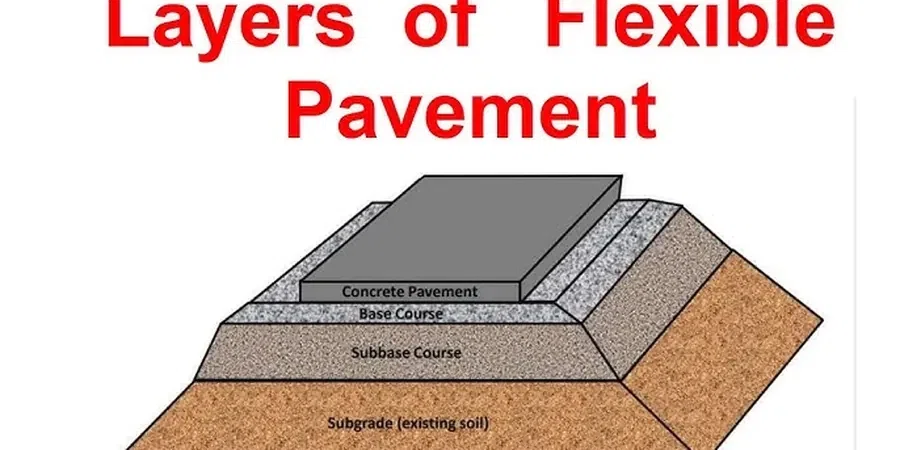
In Chesapeake, subgrade variability from historic land use demands tighter boring spacing and soaked CBR testing for reliable pavement design.
Approach and scope
Site-specific factors
The Virginia Department of Transportation uses the AASHTO 1993 pavement design guide, and that method is sensitive to subgrade strength. If you overestimate the design CBR by even two points, the pavement may rut or crack within three to five years. The risk is higher in Chesapeake because the seasonal water table fluctuation can drop the subgrade modulus by 40% during wet months. We model that by running soaked CBR tests and applying a seasonal adjustment factor. For sections with low CBR, we recommend lime or cement stabilization of the subgrade before placing the base course.
Relevant standards
AASHTO Guide for Design of Pavement Structures 1993, ASTM D1883 (CBR) — soaked and unsoaked, ASTM D698 / D1557 (Proctor compaction), VDOT Road and Bridge Specifications (Section 302/303)
Related technical services
Subgrade Investigation and CBR Testing
Boreholes and test pits with in-situ moisture content, density, and undisturbed sampling. Laboratory soaked CBR tests per ASTM D1883 to establish the design subgrade strength.
Traffic Load Analysis and Structural Number Calculation
Determination of equivalent single axle loads (ESALs) for the design life, followed by layer thickness optimization using the AASHTO 1993 empirical method.
Drainage and Base Course Recommendations
Evaluation of existing drainage patterns and subgrade permeability. Specification of open-graded base layers, edge drains, or underdrains to prevent moisture damage.
Typical parameters
FAQ
How much does a flexible pavement design study cost in Chesapeake?
A typical geotechnical investigation for flexible pavement design in Chesapeake ranges between US$1,850 and US$5,510, depending on the number of borings, laboratory tests required, and the project area. Larger subdivisions or road extensions with variable soils fall at the higher end.
What CBR value should I expect for subgrade soils in Chesapeake?
Soaked CBR values for Chesapeake subgrades typically range from 4 to 12. Sandy areas near the Northwest River yield values on the higher end, while clay-rich zones near the Intracoastal Waterway can drop below 5. We always recommend site-specific testing.
Do I need a drainage evaluation for a flexible pavement in Chesapeake?
Yes. With over 46 inches of annual rainfall and a shallow water table, drainage is critical. Without proper subsurface drainage, the base course saturates and the pavement loses structural support. We include a drainage assessment in every pavement design study.