Chesapeake sits on the Atlantic Coastal Plain, where shallow groundwater and silty sand layers are the norm. The region's humid subtropical climate means high rainfall year-round, so understanding how water moves through soil is critical. Our laboratory permeability test measures hydraulic conductivity directly from Shelby tube samples or disturbed specimens. We run both falling head for fine soils and constant head for sands. Before any deep excavation or foundation design, knowing the permeability coefficient helps predict drainage needs. Combining this data with a georradar-gpr survey can also reveal subsurface anomalies that affect flow paths. In Chesapeake, where the water table can rise within two meters of the surface, these numbers guide everything from basement waterproofing to stormwater infiltration.
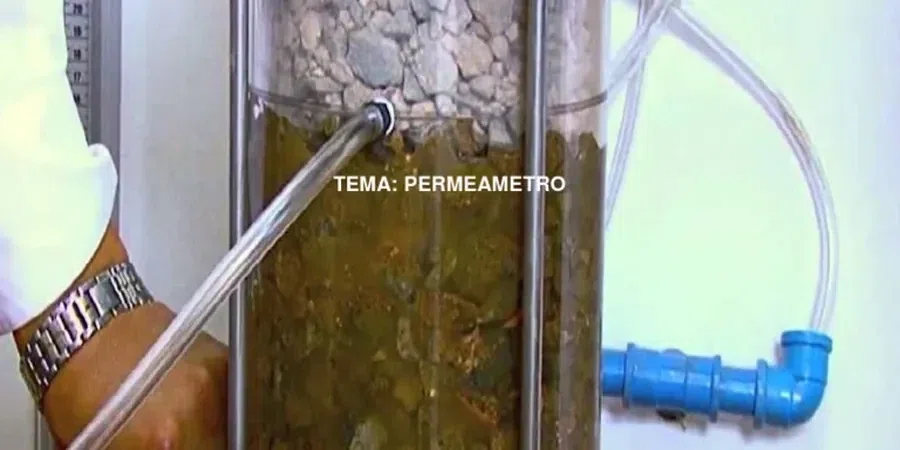
Hydraulic conductivity from lab tests directly informs drainage design and seepage analysis for Chesapeake's coastal soils.
Approach and scope
Site-specific factors
Chesapeake grew rapidly after World War II, with residential subdivisions spreading over former wetlands and farm fields. Many of these areas have fill layers and variable permeability contrasts. Without a proper lab permeability test, engineers risk underestimating seepage rates into basements or overestimating infiltration capacity for rain gardens. In neighborhoods like Great Bridge or Hickory, perched water tables cause seasonal flooding. If the soil's hydraulic conductivity is misjudged, retaining walls and pavements may fail prematurely. A reliable test from our lab helps avoid costly drainage redesigns and keeps projects on schedule in this low-lying city.
Relevant standards
ASTM D5084-16a, ASTM D2434-19, ASTM D4220/D4220M
Related technical services
Falling Head Test for Fine Soils
Best for silts and clays with low permeability. Measures k between 10⁻⁵ and 10⁻⁸ cm/s using flexible-wall cells. Ideal for foundation drainage and landfill liner design.
Constant Head Test for Coarse Soils
For sands and gravels with k above 10⁻⁴ cm/s. Rigid-wall permeameter with controlled gradient. Commonly used for stormwater infiltration systems and road base evaluation.
Consolidated Permeability (k @ σ')
Measures hydraulic conductivity at multiple effective stresses. Simulates field compaction or overburden conditions. Useful for embankment dam seepage and slope stability analysis.
Typical parameters
FAQ
What is the difference between falling head and constant head permeability tests?
Falling head is used for low-permeability soils like clays and silts, where water level drops slowly in a standpipe. Constant head is for high-permeability soils like sands and gravels, where a steady water level is maintained and flow rate is measured directly. Both methods follow ASTM standards.
How much does a laboratory permeability test cost in Chesapeake?
Typical pricing ranges from US$450 to US$610 per sample, depending on the method and number of confining pressures. Volume discounts apply for multiple specimens from the same project.
How long does it take to get results?
Most tests are completed within 3 to 5 business days after sample receipt. Low-permeability clays may take longer due to slow flow rates. We provide preliminary k-values within 48 hours if requested.
Do I need undisturbed or remolded samples for a permeability test?
Undisturbed samples from Shelby tubes are preferred for in-situ soil structure. Remolded samples are acceptable for compaction control or borrow source evaluation. We can test either, but undisturbed gives the most representative field behavior.